


Supporting Swimming Teachers Beyond Qualification

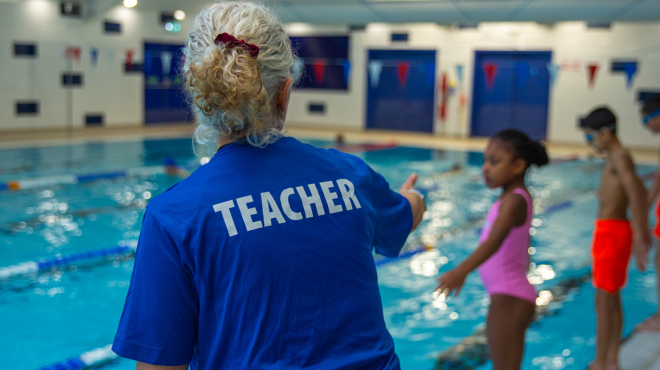
The role of the swimming teacher has always been about more than teaching strokes. Swimming teachers are educators, communicators and role models, often the first people to build a learner’s confidence and safety in the water.
What has changed is not the profession itself, but the expectations placed around how swimming teachers learn, develop and are supported. As the sector evolves, training and professional development must reflect how today’s workforce wants to engage – through practical experience, clear communication, flexibility and ongoing support that fits alongside real working environments.
Confidence before content
A great swimming teacher starts with confidence – not just their own, but the confidence they build in others. This means understanding how learners respond differently to challenge, fear and progression, and being able to adapt delivery accordingly.
That confidence is built on clear foundations – knowing what is expected, how professional standards are met, and where ongoing support sits once qualification is achieved.
Technical knowledge has always mattered, but confidence on poolside is built through practical experience, reflection and support. Training that prioritises real-world teaching skills, observation and feedback better supports teachers in the realities of busy pools and diverse learner groups.
Strong foundations, flexible delivery
Swimming teachers work across a wide range of environments: leisure centres, swim schools, local authority programmes and private operators. No two settings are identical, and effective teachers need the flexibility to adapt their approach without compromising safety or quality.
This is why professional training should focus on developing capability, not prescribing a single way of teaching. Strong foundations in safety, technique and progression allow teachers to work confidently within different programmes and frameworks while maintaining consistent professional standards.
Practical skills, not just theory
While theory underpins good practice, swimming teachers develop confidence through doing. Practical assessment, observation and supported delivery play an important role in preparing teachers to step onto poolside ready to teach.
For experienced teachers, ongoing development should recognise prior learning and experience, building on what they already know rather than repeating content unnecessarily. Proportionate assessment and meaningful CPD help teachers stay current, capable and motivated throughout their careers.
Ongoing development and professional support
Qualification is only the starting point. Great swimming teachers continue to learn, refine their skills and respond to new challenges as their careers develop.
Access to relevant CPDs, professional guidance and peer support plays a vital role in sustaining confidence and competence over time. Teachers who feel supported are more likely to remain in the profession and to deliver high-quality experiences for learners.
This need for ongoing support is something employers and tutors have consistently highlighted – not as an added extra, but as essential to confidence, retention and quality on poolside.
A profession shaped by those who deliver it
Perhaps most importantly, modern swimming teaching should be shaped by the people who deliver it every day. Tutors, swim schools, employers and teachers themselves understand what works on poolside – and where support structures can be improved.
Training and professional support that reflect real-world delivery, value tutor expertise and respect the professionalism of swimming teachers help strengthen the workforce as a whole.
As the sector continues to evolve, the question is no longer just how do we train swimming teachers?
It is how do we support them to succeed, adapt and thrive throughout their careers?
This is exactly the thinking that has shaped STA’s new Level 2 Swimming Teacher Qualification.
Developed through extensive consultation with employers, tutors and the learn-to-swim workforce, the qualification places a much stronger emphasis on practical, work-ready teaching skills – ensuring learners gain real confidence before they step onto poolside.
It includes significantly more hands-on delivery, observation and real-world application, alongside structured support beyond certification. Every newly qualified teacher also receives a bundle of CPDs and 12 months of STA membership, helping them continue to develop throughout their first year in the workforce.
Because supporting swimming teachers cannot stop at qualification. It must extend into the early stages of their careers – building confident, capable professionals who are equipped not only to teach effectively, but to thrive in a sector that depends on them.
Supporting swimming teachers beyond qualification is how we strengthen the future of aquatics – for teachers, employers, and every learner who steps into the water.
- Categories
- Association News