


Teaching Swimming Saves Lives: The Wider Impact of Poolside Professionals

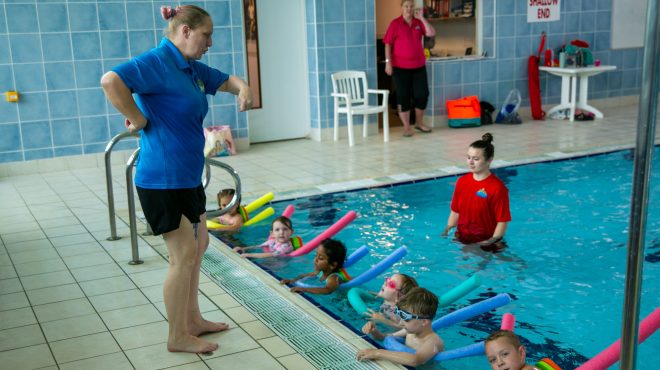
Swimming teachers do far more than teach strokes.
They build confidence, develop resilience and equip people with a skill that can one day save their life – or someone else’s. Every lesson delivered on poolside carries a responsibility that extends beyond sport, beyond recreation and beyond progression.
At its core, swimming teaching is about safety, capability and trust.
As the aquatics sector continues to evolve, it is worth pausing to recognise the wider impact of the professionals at the heart of it: the swimming teachers who shape experiences in the water every day.
Swimming is a life skill, not just an activity
Swimming remains one of the few physical activities that is also a vital life skill. It provides enjoyment, fitness and confidence, but it also offers something more fundamental: the ability to be safe in, on and around water.
That is why the role of the swimming teacher is so significant.
Teachers are often the first to introduce learners not only to movement and technique, but to personal safety, awareness and judgement in aquatic environments. The impact of that learning can last a lifetime.
The poolside workforce as a public good
The work of swimming teachers supports more than individual progress. It strengthens communities.
Confident swimmers are safer swimmers. Communities with strong access to high-quality aquatic education are better equipped to prevent avoidable tragedies and to build healthier relationships with water.
Swimming teaching therefore plays a meaningful role in public safety and wellbeing – and the workforce delivering it should be recognised accordingly.
This is not simply a profession. It is a responsibility.
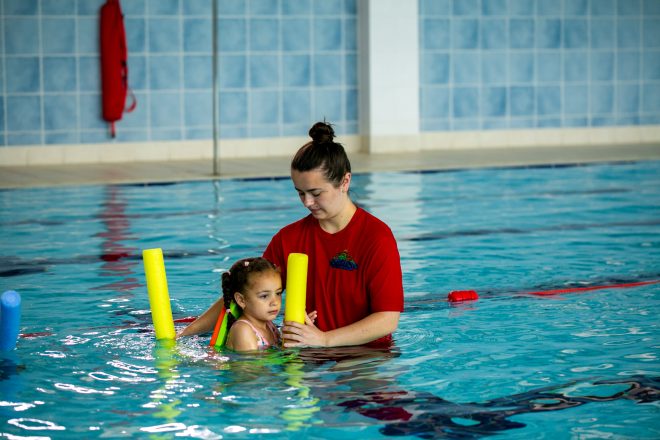
Confidence is built, not assumed
For many learners, stepping into the water is not instinctive. Fear, anxiety and uncertainty are common – especially among children, adults returning to swimming later in life, or those who have never had positive aquatic experiences.
A skilled swimming teacher understands that confidence must come before progression.
It is built through trust, communication and consistent support. Teachers do not simply instruct. They guide, reassure and adapt to meet learners where they are.
That human element of teaching is one of the most powerful aspects of aquatic education.
Quality teaching underpins safety and inclusion
Swimming teachers work with diverse learners across all ages, abilities and backgrounds.
Increasingly, this includes supporting those with additional needs, those lacking prior access to swimming, and those who require tailored approaches to feel safe and capable in the water.
This makes the need for high-quality training and professional development essential.
Consistency, safeguarding, professionalism and strong teaching foundations are not optional extras. They are what ensure swimming lessons remain safe, inclusive and effective across the sector.
Supporting those who teach is how we strengthen the sector
If swimming teaching carries such responsibility, then the profession must be supported accordingly.
That means training that reflects real-world poolside delivery. It means structured development beyond qualification. And it means valuing teachers not only for what they teach, but for the role they play in building safer, more confident communities.
At STA, our charitable objective has always been clear: the preservation of human life through the teaching of swimming and lifesaving.
Swimming teachers are central to that mission. Supporting them is not simply workforce planning – it is an investment in the future of aquatics.
This is also why STA’s new Level 2 Swimming Teacher Qualification places such strong emphasis on practical, work-ready teaching skills and confidence on poolside – ensuring teachers are equipped not only to qualify, but to carry the responsibility and impact of the role from day one.
Because every confident swimmer begins with a confident teacher.
- Categories
- Association News