


It’s About Developing People, Not Just Instructors

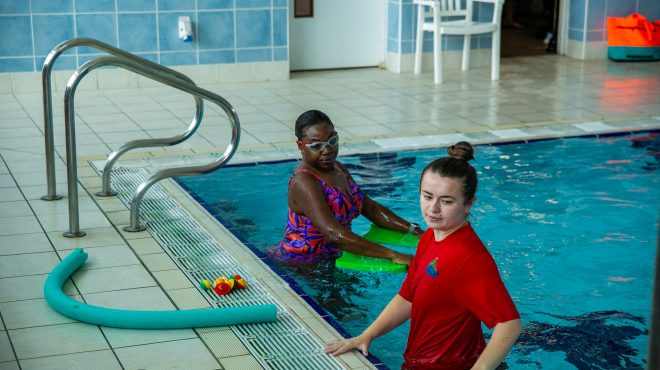
Over the years, I’ve had the privilege of training hundreds of swimming teachers, and one thing I’ve learned is that knowing how to teach swimming is only part of what makes someone a great swimming teacher.
The best teachers are great communicators. They build confidence. They adapt. They recognise that every learner standing in front of them is different and that sometimes the approach that works perfectly for one person simply won’t work for another.
That’s why a piece of feedback we recently received from a tutor delivering our new Swimming Teacher qualification really struck a chord with me:
“Delivering this course is about developing people, not just instructors – building confidence, communication and the ability to adapt to every swimmer’s needs.”
For me, that sums up exactly what we want swimming teacher education to achieve.
When we developed the new Swimming Teacher qualification, which began being delivered earlier this year, we deliberately put greater emphasis on practical teaching. Not simply because learners need more hours on poolside, but because teaching is something you learn by doing.
It’s where you learn how to explain something differently when a swimmer doesn’t understand the first time. How to spot when someone is nervous even though they haven’t said so. How to encourage without overwhelming. How to communicate with different ages, abilities and personalities. And how to adjust a lesson when things don’t quite go according to plan.
These are difficult skills to develop from a manual alone.
That’s why it has been particularly encouraging to see practical teaching come through so strongly in the feedback we’ve received from both tutors and learners.
Tutors have told us that the additional practical hours are making a real difference to the quality and confidence of teachers completing the course. Learners themselves have told us they feel better prepared for work, with one saying:
“The amount of practical hours meant we felt really well prepared for work.”
Another simply described the practical sessions as “the best part.”
That matters because achieving a qualification is an important milestone, but it isn’t the end goal.
The real goal is for somebody to walk onto poolside for their first lesson feeling that they have the knowledge, practical experience and confidence to take responsibility for the swimmers in front of them.
And that responsibility shouldn’t be underestimated.
Swimming teachers work with people who may be excited, nervous, confident, frightened, enthusiastic or reluctant – sometimes all within the same class. They need technical knowledge, but they also need patience, empathy, creativity and the confidence to make decisions.
Ultimately, we’re developing people who will go on to develop other people.
For me, that’s one of the most rewarding things about our profession. A great swimming teacher doesn’t simply help someone learn a stroke. They can help a nervous child discover confidence, give someone the skills to enjoy water safely, inspire a lifelong love of swimming and, importantly, teach skills that could one day save a life.
As we continue to develop and refine our new swimming teacher qualification, we’ll keep listening to the tutors and learners delivering and completing it. Their experiences are incredibly valuable in helping us understand not just how the qualification is working, but the kind of teachers it is helping us develop.
Because ultimately, our measure of success isn’t simply how many people achieve a qualification.
It’s the confident, capable and adaptable swimming teachers who step onto poolside afterwards – and the thousands of swimmers whose lives they will influence in the years that follow.
- Categories
- Association News

