
This unregulated course provides learners with practical awareness and confidence in an open water environment to recognise emergencies, assess risks, and take safe, effective action until professional help arrives.
Course Specification Find a Course
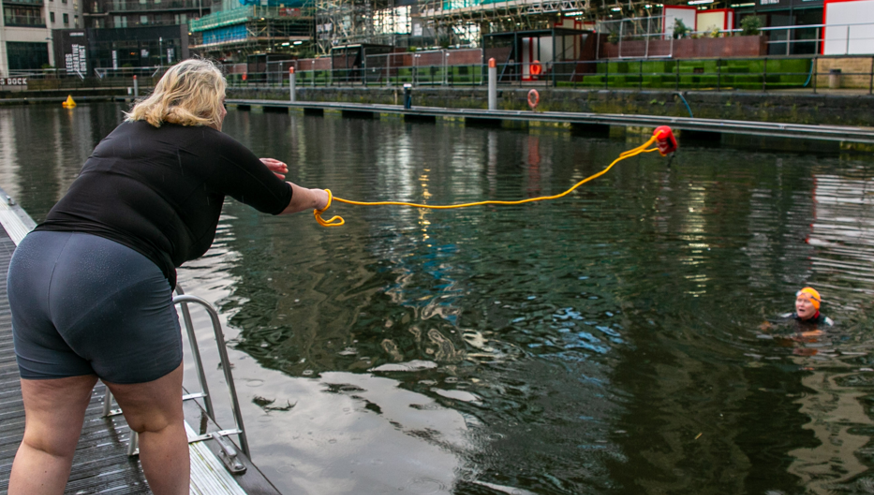
This course has been designed to provide practical awareness and confidence for people living or working in these environments. It is not a lifeguard qualification and does not train learners to enter the water or undertake specialist rescues. Instead, it focuses on recognising an emergency, understanding the risks, and taking safe, effective action that can make a significant difference while professional help is on its way.
Using the simple framework of Recognise, Respond, and Review, learners will explore how to identify potential emergencies, respond safely, support someone in difficulty, and understand the steps that follow an incident. The emphasis throughout is on protecting both the casualty and the responder, making informed decisions, and knowing how to access the right help.
By increasing awareness and preparing people for situations they may never expect to face, this course aims to help create safer waterfront communities where confidence, calm decision-making and early intervention can contribute to saving lives.
In order to attend the course, learners must:
- Have the physical, cognitive, mental, and social readiness to take part
- Be able to perform practical demonstrations on the floor.
On successful completion of the course, learners will be issued with a STA Public Open Water Emergency Response (POWER) Certificate.
The certificate does not expire; however, it is recommended learners undertake annual refresher training during to maintain their skills and keep up to date with any changes to procedures.
There is a maximum of 16 learners to 1 tutor.
Learners are required to undertake CPR and land-based rescue techniques throughout the course. Therefore, access to a suitable venue with appropriate equipment is essential.
On successful completion of the course learners will:
- Understand and apply the Water Safety Code
- Understand cold water shock and float to live
- Be able to recognise a casualty
- Be able to perform a talking and throw rescue
- Be able to perform cardiopulmonary resuscitation for a drowning adult casualty.
Equipment requirements
- A suitable venue to demonstrate practical skills
- Adult resuscitation manikins – minimum 1 : 4 learners
- AED trainer – minimum 1 : 4 learners
- Resuscitation pocket masks and face shields
- Lifesaving equipment e.g. throw bags / lifebuoys – minimum 1 : 4 learners. If dedicated rescue equipment is not available, suitable objects from the surrounding environment, such as a rope or empty plastic bottle may also be used, provided they do not place the rescuer or casualty at risk.
This course is assessed by the course tutor.
Practical assessment
Throughout the course learners will undertake practical CPR, AED and open water emergency response activities to determine their competency. Learners must complete the assessment activities without prompting or guidance from the tutor and all procedures must be completed in line with the STA Public Open Water Emergency Response (POWER) Course Guidance document in order for the learner to be deemed competent.
CPR assessment
Learners must individually demonstrate effective CPR on an adult drowning casualty including the use of an AED. Learners must follow all stated procedures and perform CPR for at least 2 minutes in order to be deemed competent and pass the assessment.
Talking and throw rescue assessment
Learners must individually demonstrate a talking and throw rescue to a casualty. This can be completed as a land-based activity if location restrictions apply.
Re-assessment
If a learner is unsuccessful at the end of the course, the learner will need to complete the course again in full at another time.
STA Approved Lifesaving or Aquatic tutors with an in-date lifesaving certificate who are competent and experienced in open water are able to deliver the STA Public Open Water Emergency Response (POWER) course.
Recent News
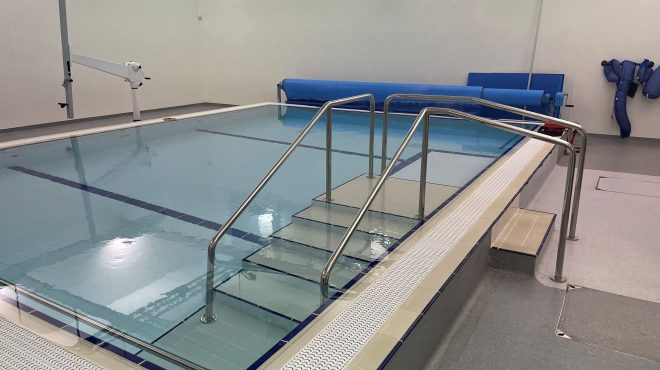
Specialist Disability Swimming Teacher Helps Open the Pool to Medically Complex Pupil
Posted on 16th October 2026

Every Metre Matters: STA Launches Colourful New Distance Medals
Posted on 14th October 2026
STA Launches New Mental Health Qualifications to Support Awareness and First Aid
Posted on 12th October 2026
Celebrate Your Way: Why Every Achievement Deserves Recognition
Posted on 9th October 2026